Oct 11, 2006

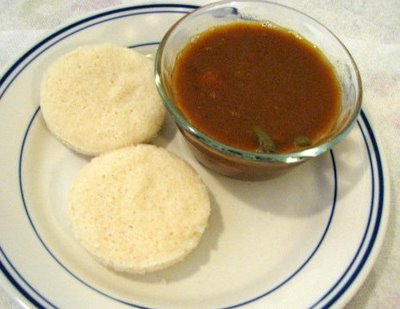
Idli with Sambar

idli Sambar
Idli is one of my favorite breakfast. Idli served with a zesty Chutney and Sambar makes a perfect breakfast. When I had just started cooking I thought Idli was very tedious job. But once I had made it, I realized its not tough as I thought. Its not so tough to get a agreeable result, but making a perfect soft Idli is really a talent that can only be achieved through experience.

To make Idli you need
1 cup Urad dal
2-2.5 cups Idli rava/rice rava

Soak urad dal for 4 hours. After 4 hrs wash the urad dal 2-3 times and drain water. Grind it into a smooth paste. Do not add more water. You want it to be as thick as you can. It is important that you do not over heat the paste when grinding. Use cold ice water if your grinder/mixer/blender becomes overheated.

Soak Idli rava with just enough water for the rava to soak. You can soak rava upto 2 hrs. You can mix the rava without soaking too. But soaking the rava makes idli softer. I use the water from cleaning the grinder after grinding the urad dal to soak Idli rava, so that any tiny bit of urad paste is not lost.

Mix the soaked Idli rava and urad paste in a big vessel, preferably more than double the size of the total volume of the batter. Add 1 tsp salt and mix well.

Keep the batter in a warm place. During the winter I keep the batter in the oven. I have a gas range, the oven beneath is always warm. If your oven isn't warm just preheat the oven to 100 deg F and switch off before you place the batter.

Let the batter stand for 8 hrs. By this time the batter will be fermented and raised to double. Mix the batter gently. Do not over beat it.

To make Idli's - You can grease the Idli moulds with a tiny drop of oil. Keep water in a big vessel with a fitted lid and a tiny opening for the steam to escape. Pour a spoonfuls of batter into the Idli moulds. Place the lid and steam the idli's for 15- 20 minutes until a toothpick inserted comes out clean.

Serve with Sambar or Chutney or both.

Oct 10, 2006

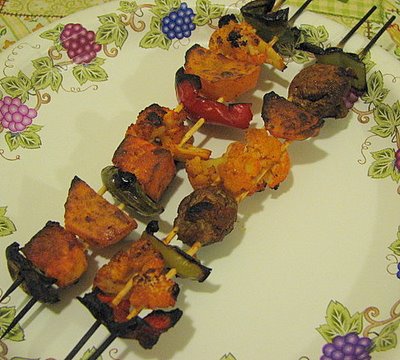
Vegetable Tandoori

Vegetable Tandoori

You can choose different vegetables of your choice to make Vegetable Tandoori. I used firm tofu, mushrooms, green and red bell peppers, potato and cauliflower. You can even use onions, zucchini, egg plants and other vegetables of your choice.

16 ounce water packed firm tofu
10-15 cauliflower florets
1 red and green bell peppers
10-12 mushrooms
1 big potato

Drain water from tofu, cut into 16 cubes. Preheat the oven to 375°F. Arrange the cubes in a single layer and bake for 20 minutes. The tofu will release water and turn light golden.

Dice potatoes into 1 inch into cubes. Boil water in a big sauce pan. Drop potatoes into the boiling water. Cook for 3 minutes. Remove the potatoes and plunge into cold water containing ice cubes to stop the cooking process.

Separate cauliflower into big florets. Drop them into boiling water for 2 minutes. Remove the florets and plunge into cold water containing ice cubes to stop the cooking process.

Now to make the tandoori marinade mix in the following ingredients in a bowl.
2 tsp coriander powder
1 tsp cumin powder
1/2 tsp garam masala
1/4 tsp turmeric powder
1/4 tsp black pepper powder
1 tsp ginger-garlic paste
1 tsp oil
1/2 cup yogurt
1/4 cup vinegar or lime juice
1/2 tsp salt
whisk in all the ingredients in a bowl.

Now mix the prepared vegetables, mushrooms and the marinade. Marinate for 8-12 hours in the refrigerator. I did not marinade the bell peppers.

Soak the bamboo skewers in water for 2 hrs. Dice bell peppers and onions into 1 inch cubes. When ready to make tandoori, thread in the vegetables and two skewers. Using 2 skewers just gives more control over the veggies when turning on the grill. The veggies tend to dance around the skewer if only one is used.

When you are done with threading all the veggies onto the skewer, prepare the grill. I do not have a grill, so I used the broiler beneath the oven on my gas stove range. Place the skewers on the grill and spray with cooking oil. Grill for 5 minutes on each side and continue till the veggies get crispy.

Serve with a wedge of lemon on the side.

Instead of making the marinate at home you can buy Shaan Tandoori Chicken BBQ masala and follow the instructions on the the packet. I have tried making Chicken tandoori with the Shaan mix, its yummy. This time I did not have enough of the Shaan tandoori mix at home, so I made the marinade of my own and added 1 tsp of tandoori mix too. Thats how I got the deep red colour on my tandoori.

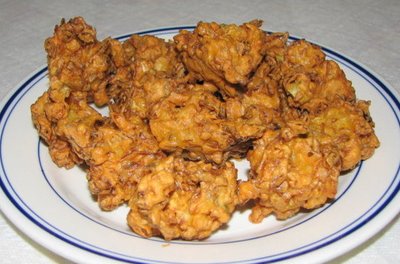
Cabbage Pakora(Cabbaga ambaDo)

Cabbage Pakora

3-4 cups chopped cabbage
1-2 cups chopped onions
2 tsp coarsely crushed coriander seeds
7-8 finely chopped green chillies
2 tsp red chilli powder
Besan
salt
oil for frying.

Chop cabbage and rinse it with cold water. Shake it and let all the water drain. Corasely crush the coriander seeds. Its enough if you manage to break all the seeds into two. Do not use coriander powder. I use a mortar and pestle. Mix cabbage, onions, crushed coriander seeds, chopped green chillies and salt. Keep this mixture ready.

To the cabbage-onion mix, add 1-2 cup besan and red chilli powder and mix. Add little water and mix thoroughly. It should just form a lump. Try to add less and just enough water such that when you take a tablespoon of the mix and make a ball it holds the shape.

Heat oil in a wok/kadai. Heat it till it reaches 300-350F. Make small balls out of the mix and add it to the hot oil. Fry for 5mins till the raw besan on the upper side gets little darker. Turn the pakoras upside down and fry for another 5mins. Keep turning upside down till the pakoras turn golden brown. Remove the pakoras from the oil and drain excess oil on a paper towel. Serve with Ketchup.

I do keep the cabbage-onion mixture in a separate bowl and mix the cabbage-onion mixture to the besan before frying each batch of pakora. This keeps the batter tough and helps the pakoras to hold the shape. If you are making a large quantities of pakora, the batter just keeps becoming thin by the time you are done frying with 2-3 batches.

My friends do like this pakora a lot. A medium sized cabbage hardly satisfies 4 people!

Oct 7, 2006

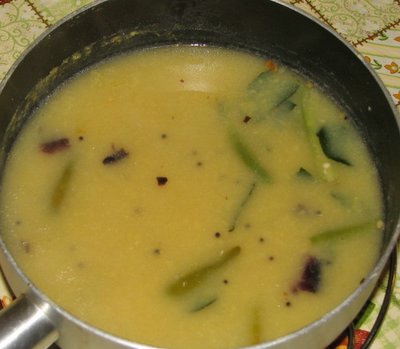
Konkani Dal (daLitoy)

Konkani Dal

Dalitoy is a konkani daal. No konkani meal is complete without Dalitoy. Its been hailed as the Kuladeva of The Konkanis. The best Dalitoy comes from the Gowda Saraswat Brahmin or the konkani temples surrounding Mangalore. The meals are fed on the banana leaves and the devotees savour on just the Dalitoy.

1 cup Tuvar Dal
4 green chilies
4 red chilies
1 tsp mustard seeds
1 sprig curry leaves
chick pea sized hing
salt to taste

Boil Tuvar Dal in a pressure cooker. Do not worry if the dal gets mashed totally. Transfer the cooked dal to a sauce pan and Bring it to a boil. Add slit green chilies and salt. Keep it on low flame, Let it boil till the hotness of the chilies is tasted in the dal. Taste the dal and adjust salt. For the seasoning, heat 1 tsp of oil, add mustard seeds. When the splutter, Switch of the flame, immediately add broken red chilies and curry leaves. Let the curry leaves impart the flavor in the oil. Take care not to burn the red chilies. Add it to the boiling dal. You can pour a spoonful of dal to the pan that contained the seasoning and add it again to the saucepan, thereby cleaning the seasoning pan. This makes a huge sizzle, so be careful . Dissolve hing in a tsp of water and add it to the dal.

Do not add hing to the seasoning. Do not add cilantro/coriander leaves either. The traditional konkani Dal, daLitoy does not have cilantro or turmeric in it.

Dalitoy can be thick or thin. Each of it has a huge fan base and konkani people often enjoy debating how the dalitoy should be made. The consistency of the dal is purely your choice. Thick Dalitoy is called daaT daaLitoy in konkani which abbreviated as D.D.T for fun.

Oct 4, 2006

Kuleeth dosa (kuleetha ramnaN)

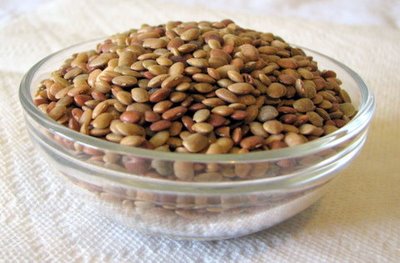
Kuleeth or kulthi, also called Horse gram in english is a legume. It looks like whole masoor or brown lentil. Kuleeth was the staple food fed for horses in India, and hence its English name. The cooked kuleeth was fed to horses and the liquid after cooking kuleeth was drained, used to make saar. I will post this recipe some other day.

Kuleeth
Kuleeth or Horse gram


This recipe for Kuleeth Dosa, called kuleetha ramnaN in konkani, is from the authentic Konkani Cookbook, "Oota Upahara" published in Kannada and "amgele kaaNa jevaN" in konkani by Jaya V Shenoy. The book has been around nearly past 20 years and is a popular cookbook in the Mangalorean Konkani households.

1 cup kuleeth/horse gram
1 cup urad dal
1.5 cup rice/idli rava

To make the batter
Soak kuleeth and urad together. If using rice, soak it separately. Soak time approx 2 hrs. Rinse and clean the above. Grind kuleeth and urad to a smooth paste. Grind rice coarsely to the consistency of idli rava. Batter should be of idli batter consistency. Mix all the batter and add salt. (If using idli rava mix it with kuleeth and urad batter now). The batter can be used immediately, does not need to be fermented.

Now to make ramnaN. ramnaN can be made in 2 different ways

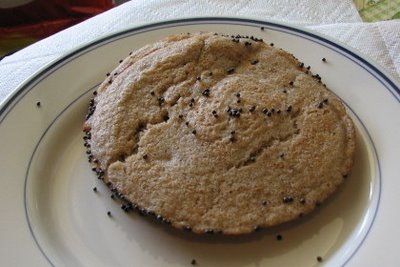
You can steam cook the batter like idli. Traditionally its cooked in a round metal plate with 1 inch depth like the cake tins/dokla stand called vaTTe in konkani

Kuleeth Dosa
Kuleeth dosa or kuleetha ramnaN


The other way to make is in a round bottomed wok or kadai. Heat 1 tsp of oil in a kadai and splutter a few mustard seeds. Add 2 serving spoonfuls of batter. Place the lid and cook on low flame till the bottom side gets crispy and brown and upper side is cooked. You can turn the ramnaN and roast other side. This turns out like Idli hidden inside a crispy Dosa!

Serve with Sambar or Rasam or Chutney.

Updates
Check out the recipe for Kuleeth Saaru and Stir Fry